

Driving Business Growth by Bridging Skills Gaps
Co-sponsored by Strategically Creative and ElevatED Consultants
By: Becky Hartnup and Robyn McKenna
In our recent post, The Future of Publishing and EdTech 2024: Monitoring and Managing Skills Gaps, we outlined critical skills shortages, their business impact, and key competencies needed to thrive. Based on reader feedback, we’re now taking a deeper dive into the main drivers behind these gaps.
What’s Driving the Skills Gap?
The publishing, publishing services, and edtech sectors are experiencing rapid transformations, largely due to technological advancements like AI and changing market dynamics. These shifts bring both challenges and opportunities. Organisations with skills gaps may feel overwhelmed by the pace of change, yet these same gaps may offer opportunities for growth.
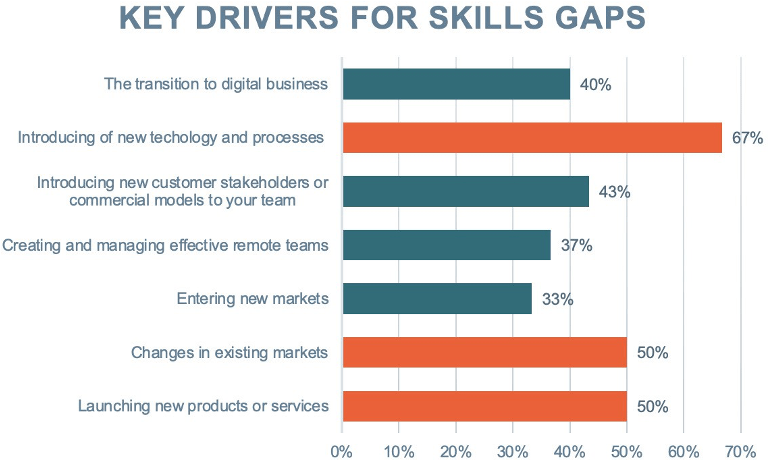
Like many industries, publishing and edtech are facing critical challenges that are impacting their company’s performance. Addressing these drivers is essential to staying competitive and fostering innovation but not addressing these drivers will lead to lost opportunities, reduced productivity, and weakened market position or game over in many cases!
100% of respondents stated at least one of these drivers were negatively impacting their business.
Workforce Skills Gap Report for Publishing and EdTech
Key Drivers for Skills Gaps
Let’s explore the key drivers of these skills gaps further along with the challenges and opportunities they present, and strategies for overcoming them, with real-world examples of success.
Introducing New Technology and Processes (67%)
- The challenge: Rapid technological change often outpaces employee readiness, leading to inefficiencies, resistance, and increased errors.
- How to address this driver: Invest in continuous learning and development programs. Comprehensive training, digital champions, and a culture of lifelong learning can enhance adaptability and innovation.
- An example: IBM’s digital badges and continuous learning platforms are an excellent example of tackling the challenge of new technology adoption. By embedding continuous learning into their organisational culture, IBM ensures that their workforce is prepared for technological advancements, minimising inefficiencies and resistance to change. Their digital badges system encourages skill development in real-time, which keeps employees up-to-date on emerging technologies and enhances agility in adapting to new processes. This reduces the likelihood of errors and maximises innovation because learning is aligned with the introduction of new technology.
- Why it works: IBM’s approach anticipates and actively addresses gaps by making learning part of the employee experience, thus fostering resilience to technological disruptions.
Changes in Existing Markets (50%)
- The challenge: Market dynamics are constantly shifting, requiring agility in market analysis, strategy, and customer engagement. Skills gaps in these areas hinder adaptability.
- How to address this driver: Market research and analytics training enable companies to better understand trends and customer needs. Agile methods help teams respond quickly to changes and build solutions to address their customers problems.
- An example: Netflix’s evolving content strategy highlights how the company leverages market research and customer feedback to stay ahead of shifting market dynamics. By constantly analysing viewer preferences and adapting content offerings accordingly, Netflix maintains a strong competitive position. Their use of analytics to guide strategic decisions allows them to predict and respond to changes in demand or competition quickly.
- Why it works: Netflix’s agility in adapting to market changes is rooted in its use of data-driven insights, which closes gaps in market analysis and strategy. They avoid stagnation and ensure sustained engagement by aligning their product with market needs.
Launching New Products or Services (50%)
- The challenge: Product launches demand technical, marketing, and project management expertise. Gaps here can cause delays, poor product performance, and lost revenue.
- How to address this driver: Cross-functional training and collaborative frameworks prepare teams for successful launches. Encouraging innovation and experimentation fuels growth.
- An example: Google’s rapid prototyping and user feedback model exemplifies how successful product launches can be achieved by emphasising agility and collaboration. They foster cross-functional teamwork and experimentation, using small, fast iterations to gather user input and refine products. This ensures that products are well-tailored to market demands and have shorter time-to-market, avoiding the pitfalls of long development cycles.
- Why it works: Google’s collaborative approach to product development, involving regular feedback loops, minimises delays and enhances product performance by aligning development closely with user expectations.
Introducing New Customer Stakeholders or Commercial Models (43%)
- The challenge: Engaging new stakeholders or adopting new commercial models requires strong relationship management, negotiation, and planning skills. Gaps lead to failed partnerships and poor models.
- How to address this driver: Training in CRM and strategic negotiation enhances engagement and business outcomes. Robust CRM systems streamline stakeholder management.
- An example: Salesforce’s CRM platform revolutionises how companies manage relationships with stakeholders, which is critical when introducing new stakeholders or business models. Salesforce provides comprehensive tools to track, manage, and nurture customer relationships, reducing the chance of lost deals or partnerships. Their platform also enables efficient strategic planning and negotiation management, helping businesses adjust smoothly to new commercial models.
- Why it works: Salesforce’s CRM approach helps businesses manage the complexity of stakeholder engagement, ensuring smoother transitions to new customer or business models while maintaining relationship quality.
Creating and Managing Effective Remote Teams (37%)
- The challenge: Remote work demands digital communication, time management, and self-discipline. Skills gaps reduce productivity and collaboration.
- How to address this driver: Training in digital tools and remote work best practices improves team performance. Virtual team-building and clear communication protocols foster cohesion.
- An example: GitLab’s remote work guidelines and robust training programs offer a textbook example of effective remote team management. As a fully remote company, they’ve developed extensive documentation and best practices for digital communication, collaboration, and time management. This preparation fosters a cohesive remote work culture and maximises productivity, ensuring that skills gaps in remote work dynamics don’t hinder their operations.
- Why it works: GitLab’s focus on clear processes and remote work training directly addresses the challenges of managing distributed teams, ensuring high levels of engagement and productivity
Transitioning to Digital Business (40%)
- The challenge: Shifting to a digital business model involves significant changes in operations, marketing, and customer engagement. Skills gaps in digital literacy and strategy impede progress.
- How to address this driver: Upskilling in digital competencies and developing clear strategies can drive successful transitions.
- An example: General Electric‘s (GE) digital transformation, involving significant investments in upskilling its workforce in digital competencies, demonstrates how a large, traditional company can successfully navigate the shift to a digital business model. By focusing on data analytics, IoT, and other digital technologies, GE enhanced its operational efficiency, innovation, and customer engagement. They also redefined internal operations to align with a digital-first strategy.
- Why it works: GE’s systematic upskilling and strategic shift minimised the disruptions associated with digital transformation, allowing them to capitalise on the efficiencies and opportunities of a digital model.
Entering New Markets (33%)
- The challenge: Expanding into new markets requires local knowledge of regulations, cultural nuances, and conditions. Skills gaps lead to compliance issues and failed entries.
- How to address this driver: Training in international business and cultural competence enhances market entry strategies.
- An example: Starbucks’ global expansion strategy, which focused on thorough market research and adapting to local tastes and regulations, is an excellent example of how cultural competence can be a key factor in entering new markets. By understanding the specific preferences and business environments in each new region, Starbucks successfully expanded its global presence without alienating local consumers.
- Why it works: Starbucks’ approach addresses skills gaps in international market knowledge and cultural competence, ensuring that their expansion efforts are not derailed by misunderstandings of local markets. Thorough preparation and local partnerships were essential to their success.
How are you minimising the impact?
There are many ways that you and your team can minimise the impact of these drivers as noted above. Here are some key takeaways you should explore to help limit the impact of these drivers:
Invest in Continuous Learning
Develop ongoing training programs to keep employees updated on emerging technologies and essential business skills. Encourage regular skill development to maintain competitiveness.
Foster Adaptability
Encourage a culture of flexibility and responsiveness, ensuring teams can quickly adjust to market changes and evolving business needs. Make learning and adaptability core values.
Leverage Technology
Implement digital tools to streamline training, collaboration, and knowledge sharing. Use technology to enhance operational efficiency and improve communication across teams.
Promote Cross-Functional Collaboration
Encourage interdepartmental collaboration to foster innovation and align teams on shared goals, especially during new product or service launches.
Build Versatility
Provide broad-based training to ensure employees can contribute across various functions, improving overall flexibility and the ability to handle evolving business demands.
Develop Global Competence
Invest in training that improves cultural awareness and local market understanding to support smooth international expansion and customer engagement in new markets.
Why should you address these drivers?
By proactively tackling these drivers, your businesses can turn challenges into opportunities, ensuring long-term competitiveness and success. According to a LinkedIn Learning report, 94% of employees say they would stay longer at a company that invests in their career development. With the pace of technological change accelerating, those who invest in upskilling their teams today and embrace a continuous learning culture will be well-positioned to thrive tomorrow.
Your training needs will continue to evolve alongside the dynamic publishing and edtech landscape. If you are concerned about skills gaps don’t let them impact your business. Reach out to us for an initial exploratory chat and let’s start tackling these skills gaps together.
- Team development workshops – design & facilitation
- Customised blended or online learning for teams
- Team and leadership coaching


Methodology of Survey
The survey included a balanced representation from the publishing and edtech sectors, with an equal 50/50 split. Responses were gathered from a wide range of departments, including Sales, Marketing, Finance, Technology, General Management, and Product. Respondents spanned various organizational levels, from C-suite executives to non-managers. This diverse representation provides a comprehensive view of skills gaps at different levels of responsibility. The survey captured responses from all major regions, including North America, Latin America, EMEA, APAC, and Australasia. Approximately a quarter of respondents had global responsibilities, suggesting that the findings reflect both regional and global perspectives.

